The Great Humidity Debate: Ultrasonic vs. Evaporative Technology
Category: Humidifiers
Tags: Evaporative humidifiers, humidification, humidification system, humidifier, humidifier system, Humidifiers, humidity, ultrasonic humidifiers
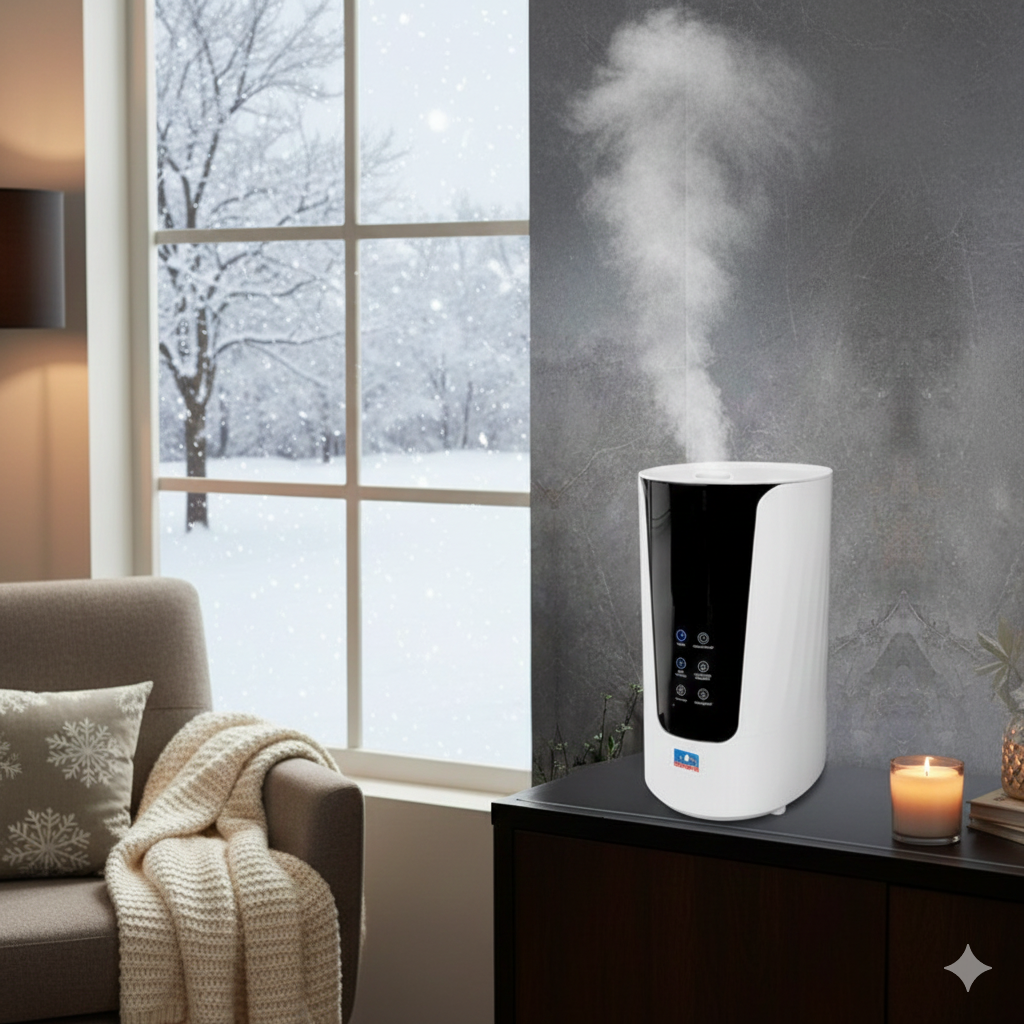
Choosing the right humidifier for a Texas home is about more than just picking a brand; it is about understanding the science of evaporation, the layout of your residence, and how much maintenance you are willing to perform. In the Lone Star State, where we often deal with large, open-concept floor plans and high-capacity HVAC systems (like the Branatech units we discussed), the choice between Ultrasonic and Evaporative technology is a strategic one.
Here is an in-depth comparison to help you determine which system will best protect your health, your home, and your energy bill.
When the humidity in your Texas residence drops below that critical 30% mark in mid-January, you have two primary technological paths to fix it. While both achieve the goal of adding moisture to the air, they do so using completely different physical principles.
-
Ultrasonic Humidifiers: The Silent Mist-Makers
Ultrasonic humidifiers have become incredibly popular in recent years due to their sleek designs and nearly silent operation.
How they work: Inside the unit, a small metal diaphragm vibrates at an ultrasonic frequency (too high for humans to hear). These vibrations turn liquid water into a fine, cool mist that is then blown into the room by a tiny fan.
The Pros:
- Whisper Quiet: Because there is no large fan or gurgling water, they are perfect for bedrooms and nurseries.
- Instant Results: The moment you turn it on, you see a visible mist entering the air.
- Energy Efficient: They consume very little electricity because they don’t use heat to create steam.
The Texas Cons:
- The “White Dust” Issue: Texas tap water, especially in areas like Austin or San Antonio, is notoriously “hard” (full of minerals like calcium). Ultrasonic units vibrate everything in the water into the air. When the mist evaporates, those minerals settle on your furniture as a fine white dust. To avoid this, you usually have to use distilled water or expensive demineralization filters.
- Bacterial Risk: Since the water isn’t boiled or filtered through a wick, any bacteria sitting in the tank is vibrated into the air you breathe. Regular cleaning is non-negotiable.
-
Evaporative Humidifiers: The Natural Choice
This is the “old school” technology, but it remains the gold standard for many large Texas homes and commercial spaces.
How they work: These units use a “wicking” filter that sits in a reservoir of water. A powerful fan pulls dry air from the room through the saturated filter. As the air passes through, the water evaporates naturally into the air.
The Pros:
- Self-Regulating: This is the biggest advantage. As the humidity in the room rises, it becomes harder for water to evaporate from the wick. This means the unit naturally slows down its output as the room reaches its “saturation point,” preventing the “tropical greenhouse” effect.
- Mineral Trapping: Unlike ultrasonic units, evaporative models leave the minerals (and many bacteria) behind in the wick. You won’t see white dust on your TV or piano.
- Large Scale Coverage: These units are typically more powerful and can humidify a whole floor of a house much more effectively than a small ultrasonic desktop unit.
The Cons:
- Noise: The fans in these units are louder. If you are a light sleeper, a high-output evaporative unit in the bedroom might sound like a loud white-noise machine.
- Filter Maintenance: The wicking filters get “crusty” with Texas minerals and need to be replaced every few months to maintain efficiency.
-
Efficiency and Capacity: Which Fits Your Square Footage?
In Texas, we tend to have larger homes with high ceilings. A small $40 ultrasonic humidifier from a big-box store might feel nice if it’s sitting on your nightstand, but it won’t do anything for the wood floors in your living room or the humidity levels in your kitchen.
For Small Spaces (Bedrooms, Offices)
If you are looking for localized relief—perhaps you wake up with a dry throat or bloody nose—the Ultrasonic is the winner. Its silent operation ensures a good night’s sleep, and since it’s only covering a small area, you won’t be as bothered by the maintenance.
For Large Residences (Open Concept, Multi-Room)
If you want to protect your hardwood floors and keep the whole family healthy, you need a Console-style Evaporative unit or a Whole-Home HVAC Bypass Humidifier. A single large evaporative console can often handle 2,000 to 3,000 square feet. Because it self-regulates, you don’t have to worry about over-humidifying the rooms closest to the unit.
-
The Maintenance Factor: A Texas Reality Check
We have to be honest about our water. Texas water is hard on appliances.
- If you choose Ultrasonic, you must be prepared to buy gallons of distilled water or clean the unit with vinegar every 3–4 days. If you don’t, you are essentially “misting” your lungs with mineral deposits and potentially mold.
- If you choose Evaporative, your main task is swapping the filter (wick). In a high-use Texas winter, you might go through three filters a season. While this has a cost, it saves you the labor of scrubbing the tank as often.
-
Final Comparison: Which Should You Buy?
| Feature | Ultrasonic | Evaporative |
| Noise Level | Silent | Moderate (Fan noise) |
| White Dust | Yes (unless using distilled) | No (trapped in filter) |
| Self-Regulation | No (can over-humidify) | Yes (natural evaporation) |
| Initial Cost | Low to Moderate | Moderate to High |
| Best For | Nightstands / Nurseries | Living Rooms / Entire Houses |
| Energy Use | Extremely Low | Low (Fan only) |
-
Summary: The Texas Homeowner’s Strategy
For the ultimate Texas winter setup, I recommend a hybrid approach.
- Main Living Area: Use a high-capacity Evaporative Console. This will protect your wood furniture and floors throughout the day and keep the “apparent temperature” warm enough so you don’t have to overwork your heater.
- Master Bedroom: Use a small Ultrasonic Humidifier with distilled water for those nights when the “Northers” are blowing particularly hard. This provides that extra boost of moisture for your skin and sinuses without the noise of a large fan.
By understanding these technologies, you can turn your home into an oasis of health and comfort, even when the Texas Panhandle is sending freezing, dry winds your way.