The Winter Challenge in Texas: Why a Humidifier is Your Home’s Best Friend
Category: Humidifiers
Tags: Climatization, Control of humidity and temperature, humidification, humidification system, humidifier, humidifier at home and office, humidifier system, Humidifiers, humidity, Portable Humidifiers, Whole-Home Humidifiers
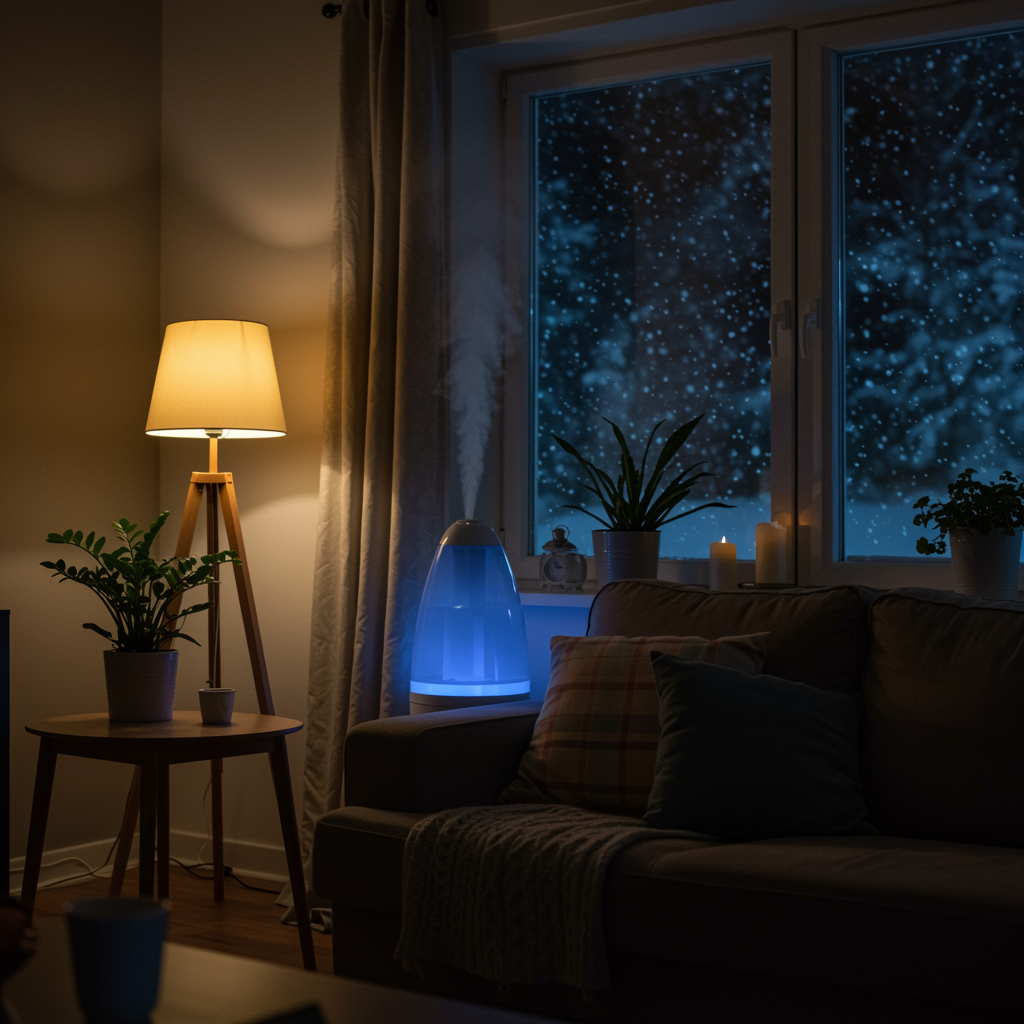
Texas is famous for its wild weather swings. We’re used to the sweltering heat and tropical humidity of summer, but winter brings a completely different beast, especially for those of us in North Texas, the Panhandle, and the Hill Country. When those Arctic blasts sweep down the Great Plains, the environment inside our homes undergoes a radical shift. In fact, managing your indoor humidity isn’t just about comfort—it’s about staying healthy and protecting your house.
-
The “Texas Dry Air” Phenomenon: What’s Happening Outside?
To understand why you need a humidifier, we first have to look at what happens to the Texas air between November and March.
The “Northers” Arrive
Texas often experiences “Blue Northers”—fast-moving cold fronts that drop temperatures in a matter of minutes. This air comes from Canada or the Rockies and is inherently bone-dry. Unlike the moist air we get from the Gulf of Mexico, this winter air holds almost no water vapor.
The Central Heating Paradox
The real issue starts when that cold air enters your home. Whether you’re in Dallas, Austin, or Amarillo, we rely heavily on gas furnaces or heat pumps during a freeze. When you take cold outside air and heat it up to a cozy 72°F, the relative humidity plummets.
If the air outside is 32°F with 50% humidity, heating it up inside without adding moisture can drop the humidity level to 10% or 15%. To put that in perspective, the Sahara Desert averages about 25% humidity. During a Texas winter, our living rooms can literally become drier than the world’s most famous desert.
-
Why Your Body Feels the “Winter Blues”
Our bodies are mostly water, and we thrive when indoor humidity is between 40% and 60%. When it drops below that, your health takes a hit in ways you might not even realize.
Your Immune System’s First Line of Defense
Our respiratory tracts are lined with a thin layer of mucus and tiny hairs called cilia that trap viruses and bacteria. The dry air from your heater dehydrates these membranes. When your throat and nasal passages get dry and “cracked,” they can’t filter out germs as effectively. This is a huge reason why the flu and common colds spread so fast in Texas homes during January and February.
Skin and Allergy Issues
Dry air sucks the moisture right out of your skin. Many Texans experience “winter itch,” characterized by dry, flaky skin, eczema flare-ups, and chapped lips. Furthermore, dry air allows dust and allergens to float more easily, irritating your eyes and throat—which people often mistake for “shifting cedar” allergies when it’s actually just extreme dryness.
-
Protecting Your Home and Your Valuables
Many homeowners forget that a house is a “breathing” structure. Wood is a natural material that expands and contracts based on moisture.
Wood Floors and Cabinets
Many beautiful Texas homes feature solid hardwood or engineered flooring. When the humidity drops below 30%, that wood starts to shrink. You might notice:
- Gaps appearing between floor planks.
- Creaks and pops when you walk.
- Damage to instruments: Guitars, pianos, and antique furniture can actually warp or crack at the joints because the wood is “starving” for moisture.
Static Electricity
We’ve all experienced that annoying “zap” when touching a doorknob in winter. In our world of remote work, that static isn’t just a nuisance—it can actually damage sensitive electronics like laptops or home servers. A humidifier keeps the air just conductive enough to let that static dissipate harmlessly.
-
Saving Money on Energy Bills
There is a fascinating link between humidity and heat. It’s all about “Apparent Temperature.”
Moist air holds heat better than dry air. When your home’s air is too dry, perspiration evaporates off your skin faster, making you feel chilly even if the thermostat says 72°F. Most people respond by cranking the heat up to 75°F, which sends their electric or gas bill through the roof.
By using a humidifier to keep your home at about 45% humidity, the air feels warmer. You can actually turn your thermostat down a couple of degrees and feel just as comfortable, saving you a significant amount on your monthly utility bills.
-
Finding the Right Fit for Your Texas Home
Depending on your setup, you have two main options:
- Portable Humidifiers: Great for specific rooms like a nursery or a home office. These come in ultrasonic (cool mist) or evaporative models and are easy to set up.
- Whole-Home Humidifiers: These are installed directly into your HVAC ductwork. They are the “set it and forget it” solution for larger homes, ensuring every room stays at the perfect level automatically.
The Bottom Line
Texas winters can be tricky. While we’re busy bundling up in heavy coats for the outdoors, we often ignore the invisible enemy inside: dry air. Using a humidifier isn’t just a luxury; it’s a critical tool for a healthy home.
By controlling your indoor climate, you’re protecting your lungs, your skin, your wood floors, and your wallet. In a state where everything is “bigger,” paying attention to the tiny details—like the water vapor in your air—is what makes a home truly comfortable.