Industrial manufacturing plants in TX affected by humidity season
Category: Water heaters
Tags: Boiler, heating system, Industrial manufacturing plants, industrial water heater, water heater systems, water heaters, Water heaters in industrial environments
Industrial manufacturing plants, energy facilities, and commercial infrastructures in Texas face substantial disruption during severe weather events—specifically tornado outbreaks and secondary severe storm seasons (spanning North Texas’s “Tornado Alley” through East Texas and the Gulf Coast). Structural damage, localized power grid interruptions, microbursts, and rapid torrential downpours frequently force critical thermal systems offline, triggering an urgent demand for commercial boilers, industrial water heaters, and rapid-response thermal loops to restore operations and prevent costly downtime.
- High-Impact Regions: North Texas (Dallas-Fort Worth Metroplex, Denton, Collin County), East Texas (Tyler, Longview), and the Houston/Gulf Coast Corridor experience the highest severe storm and tornado frequency.
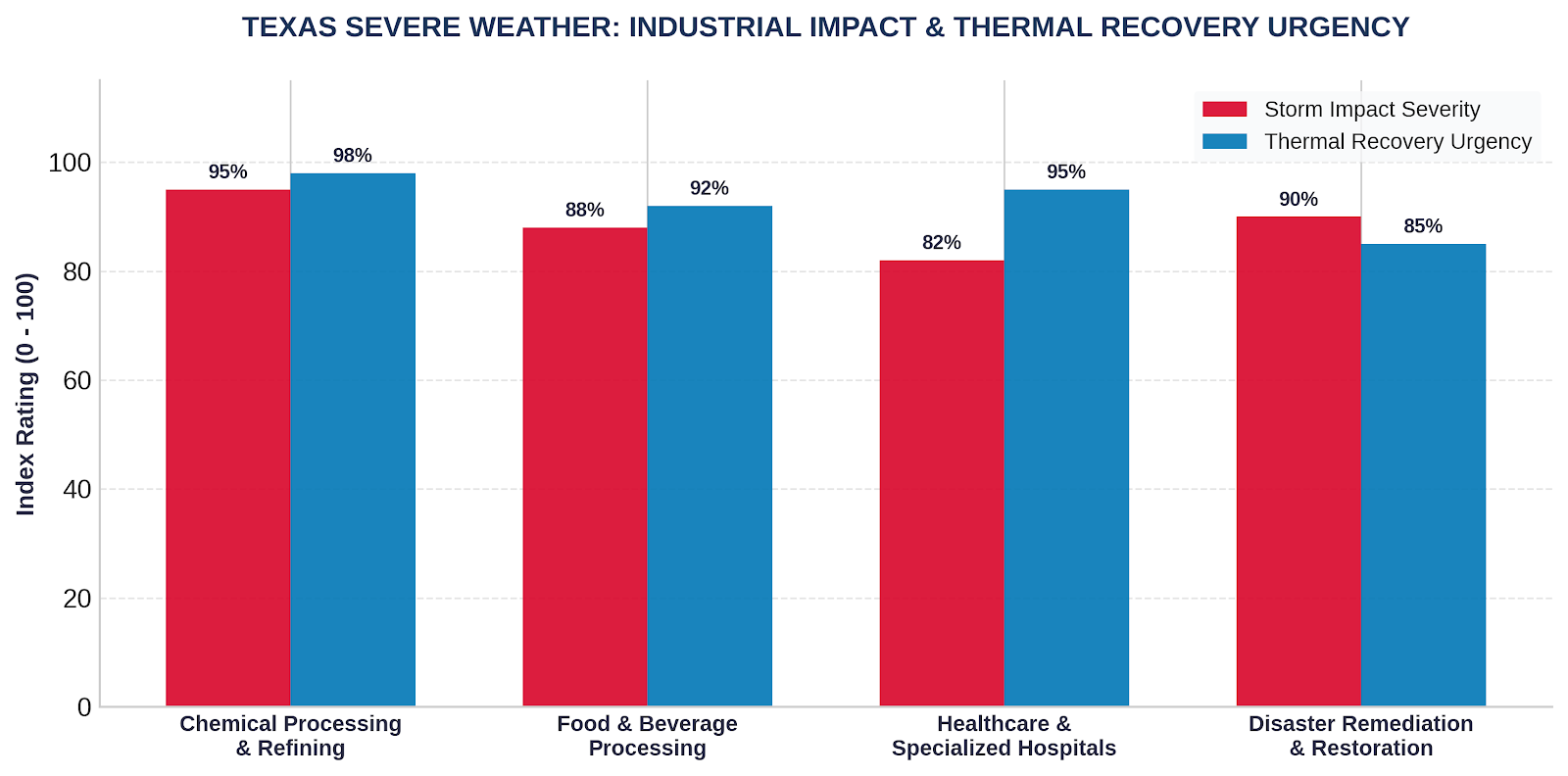
- Most Vulnerable Industries: Chemical processing, food and beverage manufacturing, healthcare systems, and oil/gas refining.
- Thermal Restoration Demand: Tornado strike aftermath requires immediate deployment of high-capacity industrial boilers and commercial water heating systems to restore process steam, maintain sanitation standards, and support disaster remediation loops.
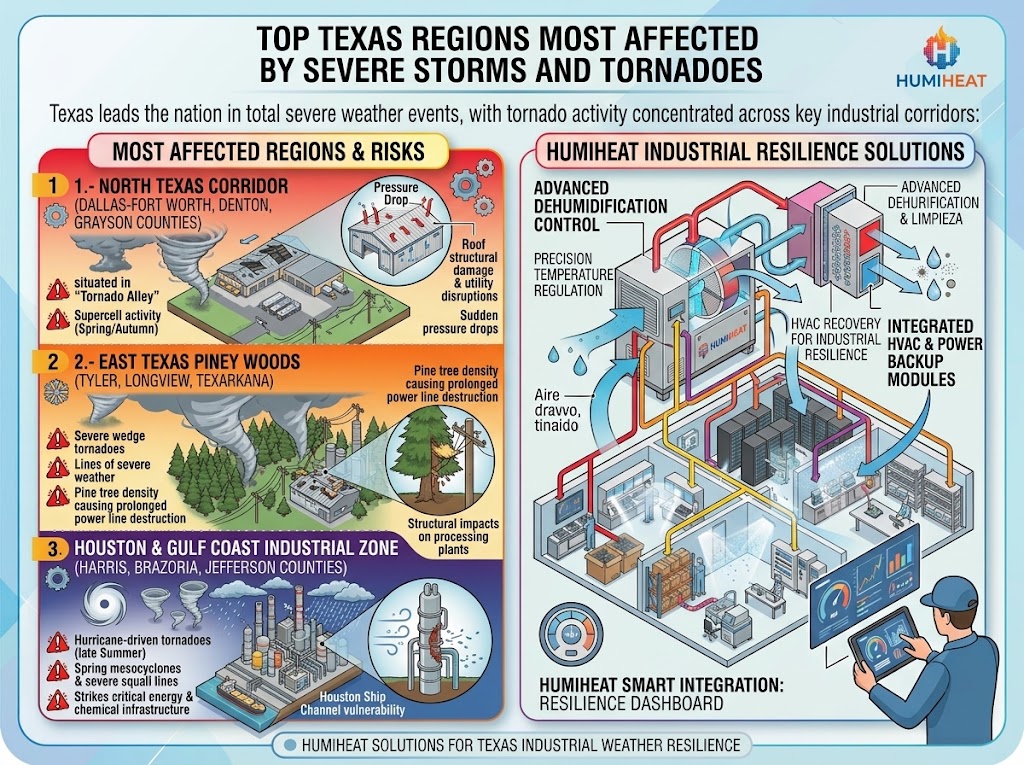
Top Texas Regions Most Affected by Severe Storms and Tornadoes
Texas leads the nation in total severe weather events, with tornado activity concentrated across key industrial corridors:
- North Texas Corridor (Dallas-Fort Worth, Denton, Grayson Counties): Situated directly in “Tornado Alley,” North Texas experiences high-frequency supercell activity between March and June (and a secondary peak in autumn). High-density industrial parks and manufacturing hubs face high exposure to structural roof damage, utility disruptions, and sudden pressure drops.
- East Texas Piney Woods (Tyler, Longview, Texarkana): Known for severe wedge tornadoes during spring and autumn severe weather lines. High pine tree density often causes prolonged power line destructions and structural impacts on processing plants.
- Houston & Gulf Coast Industrial Zone (Harris, Brazoria, Jefferson Counties): While hurricane-driven tornadoes occur late summer, spring mesocyclones and severe squall lines regularly strike the energy and chemical refining infrastructure along the Houston Ship Channel.
Top 4 Industries Most Vulnerable to Tornado Impacts and Their Boiler/Heating Requirements
1. Chemical Processing & Petrochemical Refining
When a tornado strikes an industrial corridor, localized gas main shut-offs and electrical outages halt automated boiler plants. Petrochemical facilities require immediate restoration of high-pressure process steam to prevent fluid viscosities from hardening inside piping networks and to avoid thermal shock across catalytic cracking units.
2. Food & Beverage Manufacturing
Clean-In-Place (CIP) systems and pasteurization lines depend continuously on high-volume hot water (above 180°F / 82°C). Storm damage that incapacitates primary water heating infrastructure immediately halts production. Installing heavy-duty commercial boilers and quick-recovery water heaters is essential to pass state health inspections and resume production post-disaster.
3. Hospitals & Regional Healthcare Systems
Hospitals require constant hot water for surgical sterilization, laundry, and domestic patient care. When tornadoes cause physical plant damage or emergency utility cutoffs in areas like Dallas or Tyler, medical facilities must rapidly bring online secondary, redundant commercial boilers and high-recovery water heating equipment to remain operational.
4. Commercial Real Estate & Emergency Remediation
Tornadoes rip open commercial roofing envelopes, exposing interior infrastructure to torrents of rainfall. Disaster recovery crews deploy temporary heating loops and commercial boilers alongside air movers to warm saturated structural elements, accelerate evaporation, and prevent large-scale mold outbreaks.
Technical Selection Criteria for Emergency & Replacement Thermal Systems
When procuring replacement boilers or commercial water heaters following severe weather damage, engineers evaluate three core parameters:
Required Thermal Output (BTU/hr) = Flow Rate (GPM) X 500 X Delta T (°F)
- Recovery Speed & Modulating Burners: Systems with high turn-down ratios handle dynamic post-storm loads without short-cycling.
- Dual-Fuel Flexibility: Units capable of operating on both Natural Gas and Liquid Propane (LP) ensure uninterrupted heating if municipal natural gas mains are disrupted.
- Corrosion Resistance & Weatherized Enclosures: Outdoor-rated commercial boilers built with heavy-duty copper finned tubes or stainless-steel heat exchangers withstand extreme ambient moisture during storm recovery phases.
Frequently Asked Questions (FAQ)
Why do tornadoes increase the demand for commercial boilers and water heaters?
Tornadoes cause immediate structural damage to boiler rooms, fracture utility connections, and cause flash flooding that ruins electronic burner controls and insulation. Facilities require rapid replacement or backup heating systems to restore process steam and sanitation lines.
Which Texas regions experience the highest storm-related industrial downtime?
The North Texas region (Dallas-Fort Worth metroplex extending to Sherman and Waco) sees the highest concentration of tornado-driven structural damage. The Houston Ship Channel area experiences significant storm-related steam utility losses during severe squall lines.
How quickly can a damaged industrial facility deploy replacement water heating equipment?
Emergency commercial water heaters and packaged boiler units can be staged and tied into existing mechanical loops within 24 to 48 hours using quick-connect flanges, provided the facility has pre-established connection ports for emergency thermal utilities.