The Most Polluting Industries in Texas That Benefit from Robust Industrial Air Extraction Systems
Category: Dehumidifiers
Tags: air conditioning, Air Extraction Systems, Climatization, Extraction, Industrial air extraction systems, Texas
Texas is one of the largest industrial economies in the United States. With a strong presence in energy production, manufacturing, petrochemicals, logistics, and heavy industry, the state generates significant economic value while also facing substantial environmental and air quality challenges. For companies operating in high-emission sectors, investing in a robust industrial air extraction and ventilation system is becoming increasingly important for regulatory compliance, worker safety, operational efficiency, and environmental responsibility.
This article explores the most polluting industries in Texas and explains why advanced air extraction systems are critical for their operations.
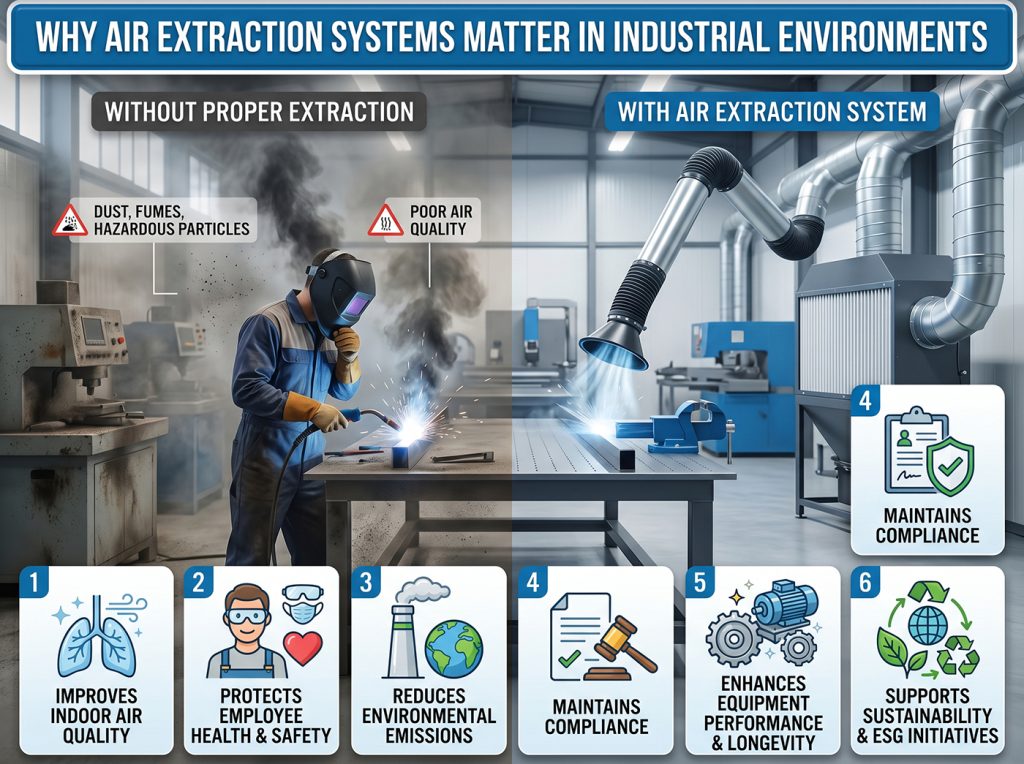
Why Air Extraction Systems Matter in Industrial Environments
Industrial air extraction systems are designed to remove airborne contaminants, including dust, fumes, vapors, smoke, volatile organic compounds (VOCs), and hazardous particles generated during production processes. These systems help businesses:
- Improve indoor air quality.
- Protect employee health and safety.
- Reduce environmental emissions.
- Maintain compliance with environmental regulations.
- Enhance equipment performance and longevity.
- Support sustainability and ESG initiatives.
For many Texas industries, air extraction is not simply an operational improvement—it is a strategic necessity.
1. Oil and Gas Production
The oil and gas sector remains one of the most influential industries in Texas. From upstream drilling operations in the Permian Basin to downstream refining activities along the Gulf Coast, the industry generates significant emissions.
Main Air Pollutants
Oil and gas facilities commonly release:
- Methane
- Volatile Organic Compounds (VOCs)
- Hydrogen sulfide
- Combustion byproducts
- Fine particulate matter
Processing plants, compressor stations, and storage terminals often experience airborne contamination that can impact both workers and nearby communities.
Air Extraction Opportunities
Industrial ventilation and extraction systems can help:
- Capture VOC emissions at the source.
- Improve air quality in enclosed processing areas.
- Reduce worker exposure to hazardous gases.
- Support compliance with federal and state environmental standards.
Because of the scale of Texas’s oil and gas operations, this industry represents one of the largest markets for industrial air extraction technologies.
2. Petrochemical and Chemical Manufacturing
Texas hosts one of the world’s largest petrochemical corridors, particularly along the Gulf Coast. Chemical plants produce plastics, fertilizers, solvents, resins, and countless industrial materials.
Main Air Pollutants
Chemical manufacturing facilities often generate:
- VOCs
- Toxic chemical vapors
- Sulfur compounds
- Nitrogen oxides (NOx)
- Hazardous airborne particulates
Many production processes involve heating, mixing, and chemical reactions that release contaminants into the workplace environment.
Air Extraction Opportunities
A robust extraction system can:
- Capture chemical fumes before they spread.
- Protect employees from toxic exposure.
- Improve process reliability.
- Reduce emissions released into the atmosphere.
Chemical manufacturers frequently require customized extraction systems due to the complexity of their production environments.
3. Petroleum Refineries
Texas contains some of the largest petroleum refineries in North America. Refining crude oil into gasoline, diesel, jet fuel, and other products involves numerous emission-generating processes.
Main Air Pollutants
Refineries emit:
- Sulfur dioxide (SO₂)
- Nitrogen oxides (NOx)
- VOCs
- Carbon monoxide
- Particulate matter
Maintenance operations, storage tanks, loading terminals, and processing units can create concentrated areas of airborne contamination.
Air Extraction Opportunities
Advanced extraction solutions can:
- Improve worker safety in maintenance zones.
- Capture emissions during loading and transfer operations.
- Enhance indoor air quality in control and processing areas.
- Support environmental compliance programs.
Given the regulatory scrutiny placed on refineries, air extraction investments often deliver measurable compliance benefits.
4. Metal Fabrication and Steel Manufacturing
Texas is home to a large network of steel mills, metal processors, and fabrication facilities serving construction, automotive, aerospace, and energy sectors.
Main Air Pollutants
Metalworking processes generate:
- Welding fumes
- Metal dust
- Grinding particles
- Cutting smoke
- Combustion emissions
Long-term exposure to these contaminants can create serious occupational health risks.
Air Extraction Opportunities
Effective extraction systems help:
- Remove welding fumes directly at the source.
- Reduce airborne metal particles.
- Improve visibility and workplace conditions.
- Extend equipment life by minimizing dust accumulation.
For steel and fabrication facilities, source-capture extraction systems often provide the highest return on investment.
5. Cement and Construction Materials Manufacturing
Texas continues to experience rapid population growth and infrastructure development, driving demand for cement, concrete, and construction materials.
Main Air Pollutants
Cement production generates:
- Cement dust
- Silica particles
- Combustion emissions
- Particulate matter
Dust emissions can affect workers, equipment, and surrounding communities.
Air Extraction Opportunities
Industrial dust collection and extraction systems can:
- Capture fine particulate matter.
- Reduce workplace exposure to silica dust.
- Improve facility cleanliness.
- Support environmental permitting requirements.
Modern filtration technologies can significantly reduce airborne dust levels in production facilities.
6. Food Processing and Agricultural Manufacturing
Although not always associated with industrial pollution, food processing plants frequently generate airborne contaminants that require effective extraction solutions.
Main Air Pollutants
Common contaminants include:
- Organic dust
- Flour dust
- Smoke
- Grease vapors
- Odors
In some facilities, combustible dust accumulation can also present safety concerns.
Air Extraction Opportunities
Air extraction systems can:
- Improve sanitation standards.
- Reduce dust-related risks.
- Control odors.
- Enhance employee comfort and productivity.
As food safety regulations become stricter, ventilation systems are increasingly viewed as essential infrastructure.
7. Plastics and Advanced Manufacturing
Texas has a rapidly expanding plastics manufacturing sector that serves packaging, automotive, healthcare, and consumer goods markets.
Main Air Pollutants
Plastic processing can release:
- VOCs
- Resin dust
- Thermal decomposition fumes
- Chemical vapors
Processes such as injection molding, extrusion, and resin handling often require targeted air management solutions.
Air Extraction Opportunities
High-performance extraction systems help:
- Remove process-generated fumes.
- Protect employees from prolonged exposure.
- Improve product quality.
- Support sustainability initiatives.
Manufacturers seeking cleaner production methods often prioritize upgraded ventilation and extraction technologies.
Market Outlook for Industrial Air Extraction in Texas
Several factors are increasing demand for industrial air extraction systems across Texas:
- Stricter environmental regulations.
- Growing emphasis on worker health and safety.
- Rising ESG and sustainability commitments.
- Expansion of manufacturing operations.
- Increased public attention to air quality issues.
Industries with high emissions and airborne contaminants are under growing pressure to modernize their environmental control systems. As a result, robust air extraction solutions are becoming a key investment for companies seeking to remain competitive while reducing operational risks.
Conclusion
The most polluting industries in Texas—including oil and gas, petrochemicals, petroleum refining, steel manufacturing, cement production, food processing, and plastics manufacturing—face significant air quality challenges. These sectors generate a wide range of airborne pollutants, from VOCs and chemical vapors to dust, smoke, and particulate matter.
For organizations operating in these industries, implementing a robust industrial air extraction system is more than a compliance measure. It is a strategic investment that improves worker safety, enhances operational performance, supports environmental goals, and helps businesses adapt to increasingly demanding air quality standards.
As Texas continues to grow as an industrial powerhouse, demand for advanced air extraction and filtration technologies is expected to increase across virtually every major manufacturing sector.