What commercial tax incentives apply for the installation of high-efficiency HVAC systems?
Category: Humidifiers
Tags: Climatization, humidifier, humidifier system, HVAC, HVAC System, Industrial humidifiers, Variable Refrigerant Flow
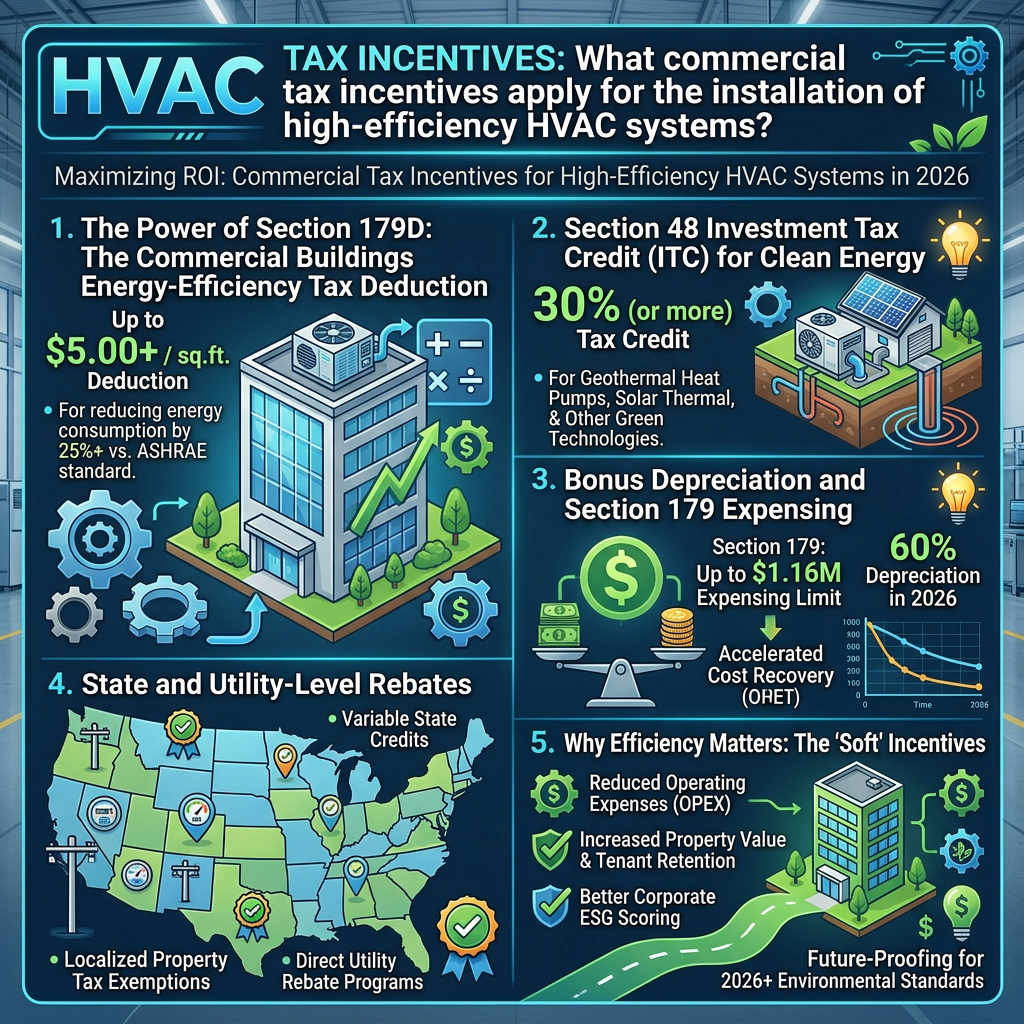
Commercial market, focusing on the financial and regulatory landscape of 2026. It highlights the Inflation Reduction Act (IRA) and other key tax mechanisms that drive ROI for high-efficiency HVAC investments.
Maximizing ROI: Commercial Tax Incentives for High-Efficiency HVAC Systems in 2026
For commercial building owners and facility managers, the decision to upgrade an HVAC system is no longer just about comfort—it is a sophisticated financial strategy. With the tightening of environmental regulations and the rising cost of energy, federal and state tax incentives have become the primary drivers for system replacements.
In 2026, the landscape of “green” tax credits is more robust than ever, particularly through the long-term provisions of the Inflation Reduction Act (IRA). Understanding these incentives is the key to transforming a high-CAPEX project into a high-yield investment.
1. The Power of Section 179D: The Commercial Buildings Energy-Efficiency Tax Deduction
The Section 179D deduction remains the “gold standard” for commercial energy efficiency. This provision allows building owners to deduct the cost of energy-efficient improvements made to a building’s envelope, lighting, or HVAC systems.
- How it Works: To qualify, the system must reduce total annual energy and power costs by a specific percentage compared to a building meeting the minimum requirements of ASHRAE Standard 90.1.
- The 2026 Benefit: Under current rules, the deduction can reach up to $5.00 per square foot (adjusted for inflation) if prevailing wage and apprenticeship requirements are met. For a 50,000-square-foot warehouse or office, this represents a massive immediate tax relief that significantly offsets the initial purchase price of high-efficiency chillers or RTUs (Rooftop Units).
2. Section 48 Investment Tax Credit (ITC) for Clean Energy
If your HVAC project incorporates renewable energy technologies, such as Geothermal Heat Pumps (GHP), the Section 48 ITC is a game-changer.
- The Incentive: The ITC provides a credit that can cover up to 30% or more of the total project cost.
- Direct Pay and Transferability: One of the most significant shifts in recent years is the ability for tax-exempt entities (like hospitals or schools) to receive these credits as “Direct Pay” or for for-profit companies to sell their credits to third parties. This ensures that even companies with low tax liability can benefit from the cash flow generated by the credit.
3. Bonus Depreciation and Section 179 Expensing
While specific “green” credits are vital, traditional tax strategies like Section 179 Expensing and Bonus Depreciation continue to play a crucial role.
- Section 179: Allows businesses to deduct the full purchase price of qualifying equipment (including HVAC) in the year it was placed in service, rather than depreciating it over 39 years. This is particularly beneficial for small to mid-sized enterprises (SMEs) managing cash flow.
- Bonus Depreciation: Although the percentage for bonus depreciation has been phasing down, it still allows for a significant portion of the equipment cost to be written off immediately in Year 1, providing a powerful front-loaded tax shield.
4. State and Utility-Level Rebates
Tax incentives don’t stop at the federal level. Many states (such as California, New York, and Texas) and local utility providers offer “custom” and “prescriptive” rebates.
- Custom Rebates: These are based on the actual energy saved by a specific system design. High-efficiency systems like VRF (Variable Refrigerant Flow) or Full Inverter setups often qualify for the highest tiers of these rebates.
- Decarbonization Grants: In 2026, many municipal programs specifically target “electrification.” Replacing a gas-fired boiler with a high-efficiency electric heat pump can often trigger additional local grants that are stackable with federal tax credits.
5. Why Efficiency Matters: The “Soft” Incentives
Beyond the direct tax write-offs, high-efficiency HVAC systems offer indirect financial incentives that impact the bottom line:
- Increased Asset Value: Energy-efficient buildings (LEED or ENERGY STAR certified) typically command higher lease rates and have higher resale values.
- Operational Savings: A system that qualifies for the 179D deduction typically reduces utility bills by 20% to 40%, creating a permanent reduction in operating expenses (OPEX).
Conclusion: The Strategic Path Forward
The “fashion” of high-efficiency HVAC in the U.S. and Mexico is driven by a simple truth: it is more expensive to keep an old system than to install a new one. Between Section 179D, the ITC, and local rebates, a commercial project can often recover 40% to 60% of its cost within the first two years through tax savings alone.
To maximize these incentives, it is essential to work with HVAC contractors who provide detailed energy modeling and tax documentation. In 2026, the most successful projects aren’t just those that cool the best—they are the ones that are engineered to be tax-efficient.
- Can you stack HVAC tax credits? Yes, in many cases, federal deductions like 179D can be combined with local utility rebates and bonus depreciation.
- What HVAC equipment qualifies for 179D? Most high-efficiency chillers, heat pumps, and Variable Speed Drive (VSD) systems that exceed ASHRAE 90.1 standards.
- Is the 179D deduction permanent? Yes, the Inflation Reduction Act made the Section 179D deduction permanent and increased the deduction amounts.
Take the time to send us an email and we can advise you on an efficient product.